Skin Care Bottle Packaging: How the Right Bottle and Disc Cap Improve Product Performance
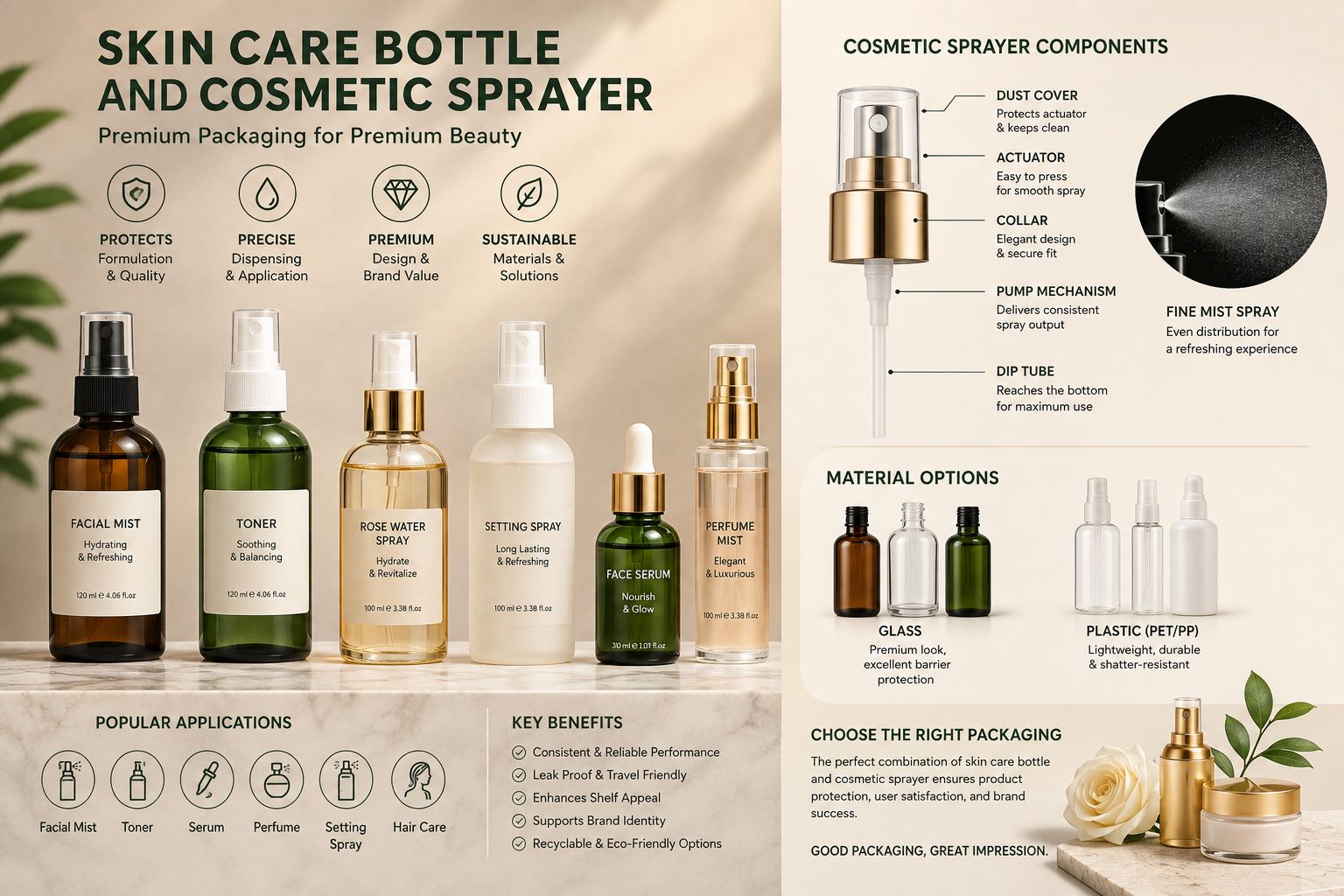
In skincare, packaging has a practical job long before it becomes a branding tool. A well-designed skin care bottle must protect the formulation, dispense it conveniently, survive handling and transport, and create a positive experience every time the customer uses the product.
The closure matters just as much. For lotions, cleansers, toners and other controlled-flow products, a disc cap can provide a simple dispensing mechanism while helping brands maintain a clean, streamlined packaging appearance.
Choosing the right bottle-and-closure combination therefore requires more than selecting an attractive shape. Material compatibility, formulation viscosity, dispensing behaviour, leakage resistance, decoration, recyclability goals and production requirements should all be considered before finalising packaging.
What Is a Skin Care Bottle?
A skin care bottle is a packaging container designed to store and dispense cosmetic and personal-care formulations such as facial cleansers, moisturisers, serums, toners, body lotions, oils and liquid treatments.
Depending on the formulation, skincare bottles may be manufactured from materials such as PET, HDPE, PP or glass. They can also be paired with different closures, including pumps, sprayers, screw caps, flip-top caps and disc cap systems.
What Makes a Good Skin Care Bottle?
A good skincare bottle should provide an effective balance between:
· Product compatibility
· Controlled dispensing
· Protection during storage
· Convenient handling
· Leakage resistance
· Visual appeal
· Branding and decoration possibilities
· Appropriate closure selection
· Manufacturing practicality
· Sustainability considerations
The most attractive bottle is not necessarily the most suitable one. Packaging should always be evaluated according to the formulation and its intended use.
Why Packaging Selection Matters in Skincare
Customers interact with packaging throughout the life of a skincare product. A poorly selected container may make an otherwise excellent formulation inconvenient to use.
Imagine a thick body lotion packaged in a bottle with an opening intended for a much thinner liquid. The customer may struggle to dispense the product. At the other extreme, a low-viscosity formulation paired with an oversized dispensing opening may release more product than intended.
Good packaging engineering aims to match the formulation, bottle and closure as one functional system.
This is particularly important for skincare brands developing new products because changing packaging after production trials can affect costs, timelines, labelling and filling arrangements.
Choosing the Right Material for a Skin Care Bottle
Bottle material influences appearance, weight, durability, chemical compatibility and recycling considerations.
PET Bottles
PET is commonly considered where clarity and a lightweight structure are desirable. Transparent or coloured PET packaging can help create a polished retail appearance while allowing brands considerable flexibility in bottle design.
HDPE Bottles
HDPE is widely associated with durable personal-care packaging. Its characteristics can make it suitable for products where robustness and practical everyday handling are priorities.
PP Packaging
Polypropylene is frequently used within cosmetic packaging systems, particularly for closures and components. Its suitability for a particular bottle or formulation should still be confirmed through appropriate compatibility testing.
Glass Bottles
Glass can create a premium visual and tactile experience and is frequently considered for serums, oils and higher-end skincare ranges. However, additional weight and breakage risk need to be evaluated when deciding whether glass is appropriate for distribution and consumer use.
What Is a Disc Cap?
A disc cap, sometimes called a disc-top closure, is a dispensing closure typically operated by pressing one side of the top. This action raises the opposite side and exposes the dispensing opening.
After dispensing, the raised section can be pressed down to close the cap.
Its straightforward operation makes the format useful for many personal-care applications where consumers need controlled access to liquid or semi-liquid formulations without removing the entire closure.
Why Pair a Disc Cap with a Skin Care Bottle?
A disc cap can offer several practical advantages when matched correctly with the bottle and formulation.
Convenient One-Handed Operation
Consumers can generally open and close a disc-top system without unscrewing a separate cap. This can improve convenience for frequently used bathroom and personal-care products.
Controlled Product Dispensing
The dispensing opening can be selected according to product characteristics. This helps manufacturers develop packaging that provides a more manageable product flow.
Clean Packaging Appearance
Disc-top closures have a compact profile that can complement modern cosmetic bottle designs. They work particularly well where a brand wants packaging that appears simple and functional rather than mechanically complex.
Suitable for Multiple Personal-Care Categories
Depending on compatibility and dispensing requirements, disc-top packaging may be considered for products including facial cleansers, body lotions, shampoos, conditioners and certain liquid skincare formulations.
Disc Cap vs Pump: Which Should You Choose?
There is no universally better closure. The correct choice depends on the product.
| Packaging Requirement | Disc Cap | Pump |
| Simple dispensing mechanism | Strong option | Strong option |
| Controlled small doses | Depends on opening and formulation | Often highly suitable |
| One-handed use | Generally convenient | Generally convenient |
| Packaging simplicity | High | More components involved |
| Thick formulations | Compatibility testing required | Depends on pump specification |
| Travel applications | Leakage testing essential | Locking mechanism may be beneficial |
| Minimal appearance | Often suitable | Suitable for premium positioning |
A skin care bottle with disc cap can be an effective choice when straightforward dispensing is the priority. Pumps may be preferable where measured or repeated dosing is particularly important.
How to Select the Correct Disc Cap
A closure should never be selected simply because it fits visually.
1. Check the Bottle Neck Specification
The closure and bottle neck must be technically compatible. Neck finish, diameter, thread design and sealing surfaces need to match.
2. Consider Product Viscosity
The dispensing behaviour of a watery cleanser differs considerably from that of a thick lotion.
Viscosity should therefore influence the choice of dispensing orifice and closure design.
3. Conduct Leakage Testing
A bottle that appears secure when standing upright may behave differently during shipping.
Packaging trials should consider situations such as:
· Inverted storage
· Temperature variation
· Vibration
· Transportation
· Repeated opening and closing
· Consumer handling
Testing requirements should be determined according to the actual product and distribution conditions.
4. Evaluate Formulation Compatibility
Cosmetic formulations can interact differently with packaging materials.
Brands should carry out suitable compatibility and stability assessments using the actual formulation rather than assuming that a material is suitable because it has been used for another skincare product.
Matching Packaging to Different Skincare Products
Different formulations create different packaging requirements.
Facial Cleansers
A cleanser may benefit from a squeezable skin care bottle and controlled-flow closure. The dispensing opening should suit the cleanser’s viscosity so customers can obtain a practical amount without unnecessary mess.
Body Lotions
Lotions may require a bottle with sufficient flexibility to assist dispensing. Depending on viscosity and positioning, either a disc-top closure or pump system may be appropriate.
Toners
Low-viscosity products require particular attention to dispensing control. An opening that is too large may release excessive product.
Serums and Concentrated Treatments
Serums are commonly associated with droppers, treatment pumps or airless systems because customers may need relatively small quantities. A disc cap is therefore not automatically the best option for every skincare formulation.
This distinction is important when developing packaging around actual product behaviour rather than appearance alone.
Packaging Design Can Strengthen Brand Positioning
Packaging is also a physical representation of the brand.
Bottle shape, closure style, surface finish, label design and decoration collectively influence how consumers perceive a skincare range.
A minimalist brand might choose a clean cylindrical bottle with understated decoration. A mass-market personal-care range may prioritise durability, efficient filling and convenient dispensing. A premium skincare business may focus more heavily on tactile finishes, specialised decoration and distinctive bottle geometry.
Whatever the positioning, functionality should remain central.
Decoration and Customisation Options
Depending on the bottle material and supplier capabilities, skincare packaging may support various branding techniques, including:
· Pressure-sensitive labels
· Screen printing
· Hot stamping
· Colour customisation
· Frosted or matte effects
· Metallic decorative elements
· Embossed or moulded branding
· Custom bottle and closure combinations
Before selecting a decoration technique, brands should consider production quantities, surface compatibility, artwork complexity and budget.
Suggested internal link: Explore our custom cosmetic packaging solutions for bottle decoration and branding options.
Sustainability Considerations for Skincare Packaging
Sustainable packaging decisions should consider the complete packaging system rather than relying on a single environmental claim.
Brands may evaluate opportunities such as reducing unnecessary material, selecting recyclable materials where appropriate, improving bottle-to-product ratios and simplifying packaging components.
Local recycling infrastructure also matters. A package technically made from recyclable material does not automatically guarantee that it will be collected and recycled in every market.
Where environmental claims will appear on labels or marketing materials, they should be specific, supportable and relevant to the actual packaging configuration.
Suggested internal link: Read our sustainable cosmetic packaging guide for more information about material selection.
Questions to Ask a Skin Care Bottle Supplier
Before placing a commercial packaging order, obtain clear technical information from the supplier.
Useful questions include:
1. Which bottle materials are available?
2. What neck finishes and closure options are compatible?
3. Is a disc cap available for the selected bottle?
4. What capacities and dimensions are offered?
5. Are samples available for compatibility and filling trials?
6. What decoration methods can be applied?
7. Are custom colours available?
8. What are the minimum order quantities?
9. What quality-control documentation can be provided?
10. What production and delivery lead times apply?
For customised packaging, discuss artwork, colour tolerances, tooling requirements and approval samples before moving into full-scale production.
Common Mistakes When Selecting Skincare Packaging
One common mistake is choosing packaging primarily from photographs or appearance. A bottle may look ideal but perform poorly with the actual formulation.
Other mistakes include overlooking neck compatibility, failing to conduct leakage tests, selecting an unsuitable dispensing opening, ignoring filling-line requirements and ordering commercial quantities before testing representative samples.
Packaging development should ideally follow a structured process: formulation assessment, bottle selection, closure matching, sample testing, decoration evaluation and final production approval.
Internal-Link Opportunities
Relevant internal links can strengthen topical authority while helping potential buyers explore related products. Useful anchor text could include cosmetic bottle manufacturer, lotion bottle packaging, cosmetic pump, cosmetic sprayer, plastic cosmetic bottles, custom cosmetic packaging, and skincare packaging solutions.
Links should point to genuinely useful product or educational pages rather than being inserted simply for SEO.
Frequently Asked Questions
What is the best bottle for skincare products?
The best bottle depends on the formulation, viscosity, required product protection, dispensing method, brand positioning and distribution conditions.
What is a disc cap used for?
A disc cap is a press-operated closure used to conveniently dispense compatible liquid and semi-liquid personal-care products.
Can a disc cap be used on a skin care bottle?
Yes, provided the bottle neck, closure specification, formulation and dispensing requirements are compatible.
Is a disc cap suitable for lotion?
It can be suitable for certain lotions, but the formulation’s viscosity and the closure’s dispensing opening should be tested before production.
Which material is commonly used for skincare bottles?
PET, HDPE, PP-related packaging systems and glass are among the materials considered for skincare packaging, depending on product requirements.
Are skincare bottles customisable?
Many packaging suppliers offer options such as custom colours, printing, labels, surface finishes and specialised decoration, subject to production requirements.
How do I choose the right bottle size?
Consider the intended product quantity, expected usage frequency, retail positioning, filling requirements and overall packaging dimensions.
Should packaging be tested before bulk production?
Yes. Representative packaging should be evaluated with the actual formulation wherever possible before committing to commercial-scale production.
Can skincare packaging be designed for premium brands?
Yes. Bottle geometry, materials, colours, decoration, closure design and surface finishing can all contribute to premium positioning.
What information should I give a packaging supplier?
Provide the product type, formulation characteristics, required capacity, preferred material, closure type, expected order quantity, decoration requirements and target market.