Senior Fitness Trainer at Home Gurugram: A Safer Way to Stay Active and Independent
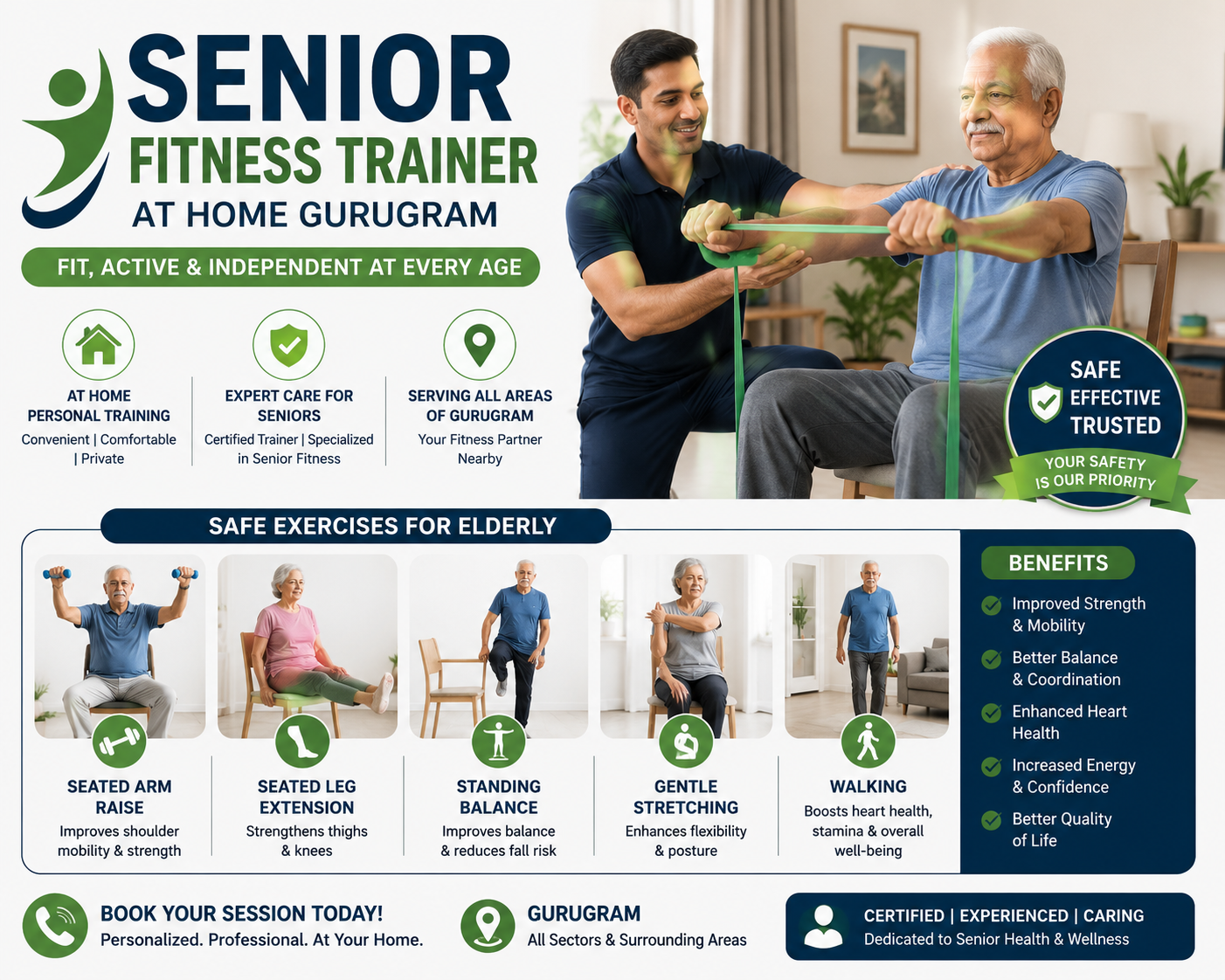
Ageing does not mean giving up movement. Regular, well-planned physical activity can help older adults maintain mobility, balance, confidence, and independence. For families seeking personalised support, choosing a senior fitness trainer at home Gurugram can make exercise more comfortable, practical, and consistent.
The goal is not intense workouts. It is choosing safe exercises for elderly people that match current strength, flexibility, balance, health history, and daily routine.
Why Home Fitness Matters for Seniors
Older adults often become less active because of joint stiffness, fear of falling, fatigue, or reduced confidence. Too much inactivity can make everyday tasks harder. A structured home exercise routine can support walking, standing up from a chair, climbing stairs, reaching, and completing household activities.
A qualified trainer can observe posture, balance, and exercise tolerance, making it easier to adjust each session and avoid unnecessary strain.
Regular movement can also make daily routines feel easier, helping seniors participate more confidently in family, social, and household activities each day.
Benefits of a Senior Fitness Trainer at Home Gurugram
Personal training at home offers more than convenience. It creates a controlled environment where the trainer can focus on one person.
Key benefits include:
- Personalised exercises based on age and ability
- Better supervision during balance and strength movements
- Gradual progression instead of sudden intensity
- Convenient sessions without travelling to a gym
- Improved confidence for seniors new to exercise
- Greater consistency through scheduled sessions
- Modifications for limited flexibility or mobility
Safe Exercises for Elderly Adults
The best safe exercises for elderly adults usually focus on strength, balance, flexibility, and light cardiovascular activity.
Chair Sit-to-Stand
Sit near the front of a stable chair with feet flat. Lean slightly forward and stand slowly, using the armrests only if needed. Sit back down with control.
Supported Heel Raises
Stand behind a sturdy chair and hold it lightly. Slowly raise the heels, pause, and lower them. Heel raises strengthen the calves and support ankle stability.
Seated Knee Extensions
Sit upright and slowly straighten one leg, hold briefly, and lower it. Repeat with the other leg. This works the front thigh muscles without requiring floor exercises.
Wall Push-Ups
Stand facing a wall with palms at shoulder height. Bend the elbows and move the chest gently toward the wall, then push back.
Marching in Place
Stand near stable support and gently lift one knee at a time.
Exercise Comparison Table
| Exercise | Main Focus | Support Needed | Beginner Friendly |
| Chair sit-to-stand | Leg strength | Stable chair | Yes |
| Heel raises | Balance and calves | Chair or counter | Yes |
| Seated knee extension | Thigh strength | Chair | Yes |
| Wall push-up | Upper-body strength | Wall | Yes |
| Marching in place | Cardio and coordination | Optional support | Yes |
How to Make Senior Exercise Safer
Safety should come before repetitions, speed, or intensity.
- Start with a gentle warm-up.
- Use stable chairs, walls, or counters when required.
- Wear comfortable, non-slip footwear.
- Keep the exercise area free from loose rugs and obstacles.
- Increase repetitions slowly.
- Stop if there is unusual pain, dizziness, chest discomfort, or severe shortness of breath.
- Allow enough recovery between sessions.
Seniors with medical conditions, recent surgery, unexplained symptoms, or major mobility problems should speak with an appropriate healthcare professional before starting or changing an exercise programme.
What a Good Senior Training Session Looks Like
A thoughtful home session does not need complicated equipment. A trainer may begin with mobility exercises, continue with light strength work, add balance practice, and finish with gentle stretching.
A Simple Session Structure
A session might include a short warm-up, strength and balance exercises, light walking or marching, and a cool-down.
Progress Should Be Gradual
Progress may mean better control, standing slightly longer, completing another repetition, or using less hand support.
Comfort Is Not the Same as Laziness
An effective session should feel manageable but purposeful.
Choosing the Right Senior Fitness Trainer in Gurugram
Before hiring a trainer, ask about experience working with older adults. A suitable professional should understand senior exercise principles, communicate patiently, and modify movements when needed.
A reliable senior fitness trainer at home Gurugram should also explain why each exercise is being performed rather than simply counting repetitions.
Frequently Asked Questions
1. Is home exercise suitable for elderly people?
Yes. Many seniors can exercise safely at home when movements suit their ability and environment.
2. How often should seniors exercise?
Frequency depends on fitness level and health status. Consistency is more important than occasional intense workouts.
3. Are chair exercises effective?
Yes. Chair-based movements can support strength, mobility, and coordination while providing stability.
4. What are safe exercises for elderly beginners?
Chair sit-to-stands, seated leg movements, supported heel raises, wall push-ups, and gentle walking are common beginner options.
5. Can seniors exercise with knee discomfort?
Sometimes, but exercises may need modification. Persistent or unexplained pain should be assessed by a healthcare professional.
6. Is strength training safe after 60?
Resistance, technique, and progression should match the individual.
7. Can exercise improve balance?
Balance-focused exercises can help develop stability and movement confidence when practised safely.
8. Does a senior need gym equipment?
No. Many home exercises use body weight, chairs, walls, resistance bands, or light equipment.
9. How long should a senior workout last?
Beginners may start with shorter sessions and increase activity gradually.
10. Why hire a senior fitness trainer at home Gurugram?
A home trainer can provide personalised supervision, exercise modifications, convenient scheduling, and structured progression without gym travel.