Passenger Elevator and Glass Lift: Past, Present and Future of Vertical Mobility
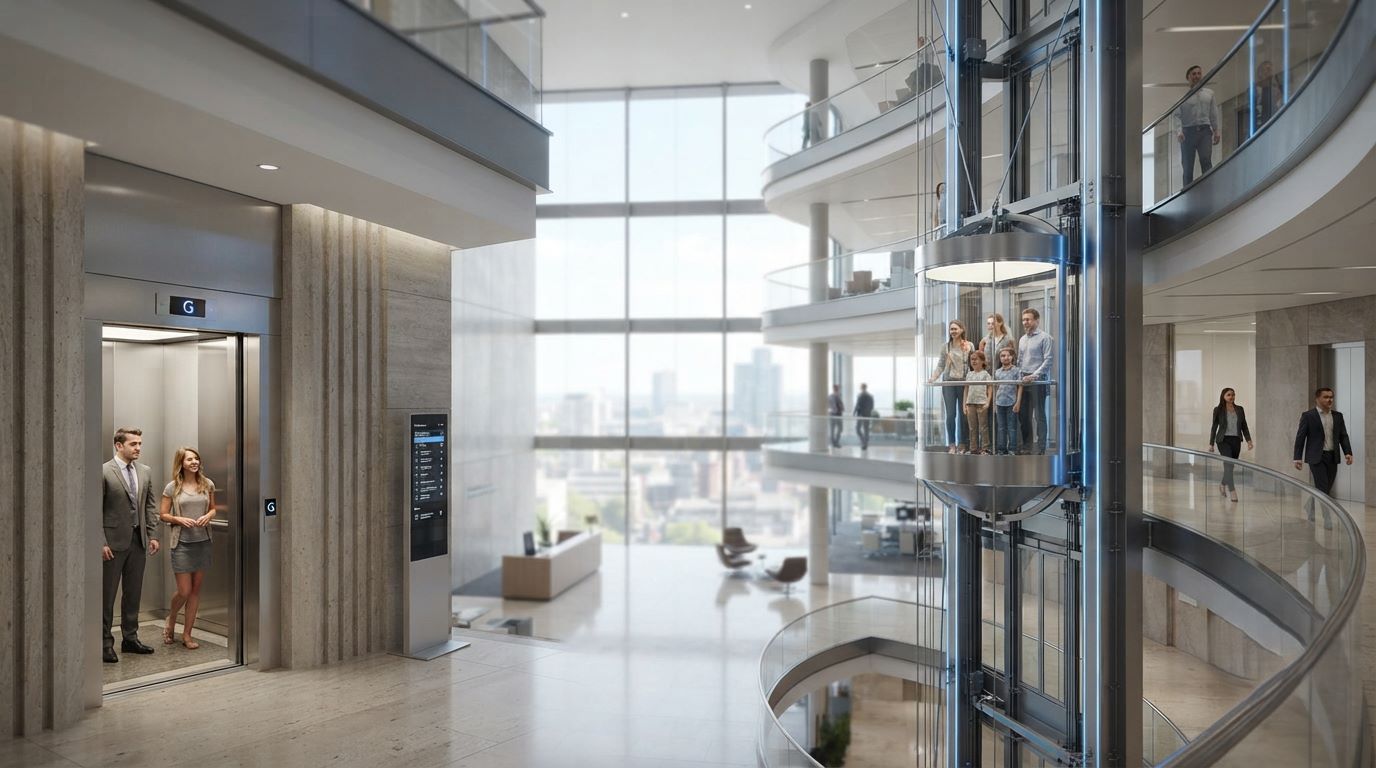
The passenger elevator has evolved from a mechanical convenience into essential building infrastructure. The glass lift has added a visual dimension, turning vertical transportation into part of architectural design.
The Past: Evolution of the Passenger Elevator
Passenger elevators grew with taller buildings. Early systems were manually controlled, while safety mechanisms, electrical drives, and automatic controls eventually enabled reliable passenger service.
ASME records that early elevator regulations emerged in major cities during the early twentieth century, while the 1921 A17 safety code established an important foundation for standardized elevator safety.
From Manual Systems to Automation
The evolution can be summarized as:
- Manual, operator-controlled elevators.
- Electrification and traction systems.
- Automatic doors and controls.
- Computerized operation.
- Destination dispatch.
- Connected monitoring and predictive maintenance.
The Rise of the Glass Lift
The glass lift shifted elevators from purely functional equipment toward experience-driven architecture. Transparent cabins and glazed shafts can make buildings feel more open while providing passengers with views between floors.
A glass lift is not simply an ordinary elevator fitted with standard glass. Glazing, framing, doors, mounting, and impact resistance require engineering for an occupied moving environment.
Passenger Elevator vs Glass Lift
| Feature | Passenger Elevator | Glass Lift |
| Main purpose | Passenger transportation | Passenger transportation plus visual design |
| Cabin | Enclosed or partly glazed | Usually panoramic or transparent |
| Common locations | Apartments, offices, hospitals | Hotels, malls, villas, atriums |
| Priority | Safety, capacity, accessibility | Safety, aesthetics, visibility |
| Design focus | Function and efficiency | Architecture and experience |
A glass lift can therefore be a passenger elevator; “glass” mainly describes its architectural treatment.
Safety: The Non-Negotiable Priority
Safety remains more important than appearance or luxury. Modern standards address passengers, maintenance workers, equipment, and surrounding areas. ISO 8100-1:2026, published in March 2026, specifies safety rules for permanently installed lifts transporting people or people and goods and covers traction, positive-drive, and hydraulic systems.
Essential Safety Features
Safety provisions include:
- Door interlocks and obstruction detection.
- Overspeed and unintended-movement protection.
- Emergency communication.
- Accurate floor leveling.
- Emergency lighting and controlled rescue operation.
- Load monitoring.
- Inspection and preventive maintenance.
Glass installations require additional attention to suitable safety glazing, secure fixing, cleaning access, visibility, and impact performance. Compliance should always be confirmed for the specific location and installation.
The Present: Smarter and More Efficient Elevators
Today’s passenger elevator increasingly connects with building-management systems. Variable-speed drives can improve efficiency, while destination-control technology groups passengers traveling to similar floors. Sensors can monitor operating conditions and support maintenance teams in identifying potential problems before failures occur.
Current priorities include:
- Efficient motors and drives.
- Regenerative technology where appropriate.
- Touchless or mobile interfaces.
- Destination dispatch.
- Remote diagnostics.
- Accessibility-focused controls.
- Quiet, smooth ride performance.
The Future of Passenger Elevators and Glass Lifts
Future elevators will emphasize connectivity, sustainability, predictive maintenance, advanced materials, and intelligent building integration. AI and data analysis can help detect abnormal patterns and improve maintenance planning.
Emerging Glass Lift Trends
Future glass lift designs may use lighter structures, improved glazing, dynamic lighting, digital displays, and better architectural integration.
What Buyers Should Prioritize
Consider:
- Building height and traffic demand.
- Rated capacity and speed.
- Accessibility requirements.
- National and local regulations.
- Energy consumption and lifecycle cost.
- Service network and spare-parts support.
- Cabin materials and finishes.
- Safety certification and inspection.
In India, owners should verify current BIS and state requirements before procurement. BIS lists IS 17491:2020 for risk assessment and risk reduction of existing lifts.
Why the Past Matters to the Future
Elevator history shows that successful innovation combines convenience with engineering discipline, from manual systems to computerized, connected infrastructure.
The future passenger elevator will become more intelligent, while the glass lift becomes more integrated with architecture. Safety, accessibility, installation, inspection, and maintenance remain essential.
Frequently Asked Questions
What is a passenger elevator?
A passenger elevator is a vertical transportation system designed mainly to carry people safely between building levels.
What is a glass lift?
A glass lift is an elevator with significant transparent or glazed cabin or shaft elements, creating visibility and a panoramic experience.
Is a glass lift safe?
Yes, when properly engineered, installed, inspected, and maintained with appropriate safety glazing and compliant components.
Can a glass lift be installed in a home?
Yes. Residential glass lifts can suit suitable homes when space, capacity, engineering, and requirements are addressed.
Are glass lifts expensive?
They can cost more because specialized glazing and architectural integration may increase costs.
Are modern passenger elevators energy efficient?
Many are. Efficient motors, variable-speed drives, standby modes, and regenerative systems can reduce energy consumption.
How often should an elevator be maintained?
Maintenance depends on equipment, usage, manufacturer instructions, and local rules. Qualified professionals should establish intervals.
Can AI improve elevator operation?
Yes. AI and data analytics can assist predictive maintenance, traffic analysis, fault detection, and operational optimization.
What should buyers compare?
Compare safety, capacity, speed, accessibility, energy performance, warranty, service support, and lifecycle cost.
Are glass lifts only for luxury buildings?
No. They can suit homes, commercial properties, public buildings, hotels, and projects where visibility and architectural presentation are valuable.
https://newsgrow.blogspot.com/2026/08/dumbwaiter-lift-vs-passenger-lift-which.html