CO Detector and LPG Gas Leakage Detector: Essential Safety for Every Space
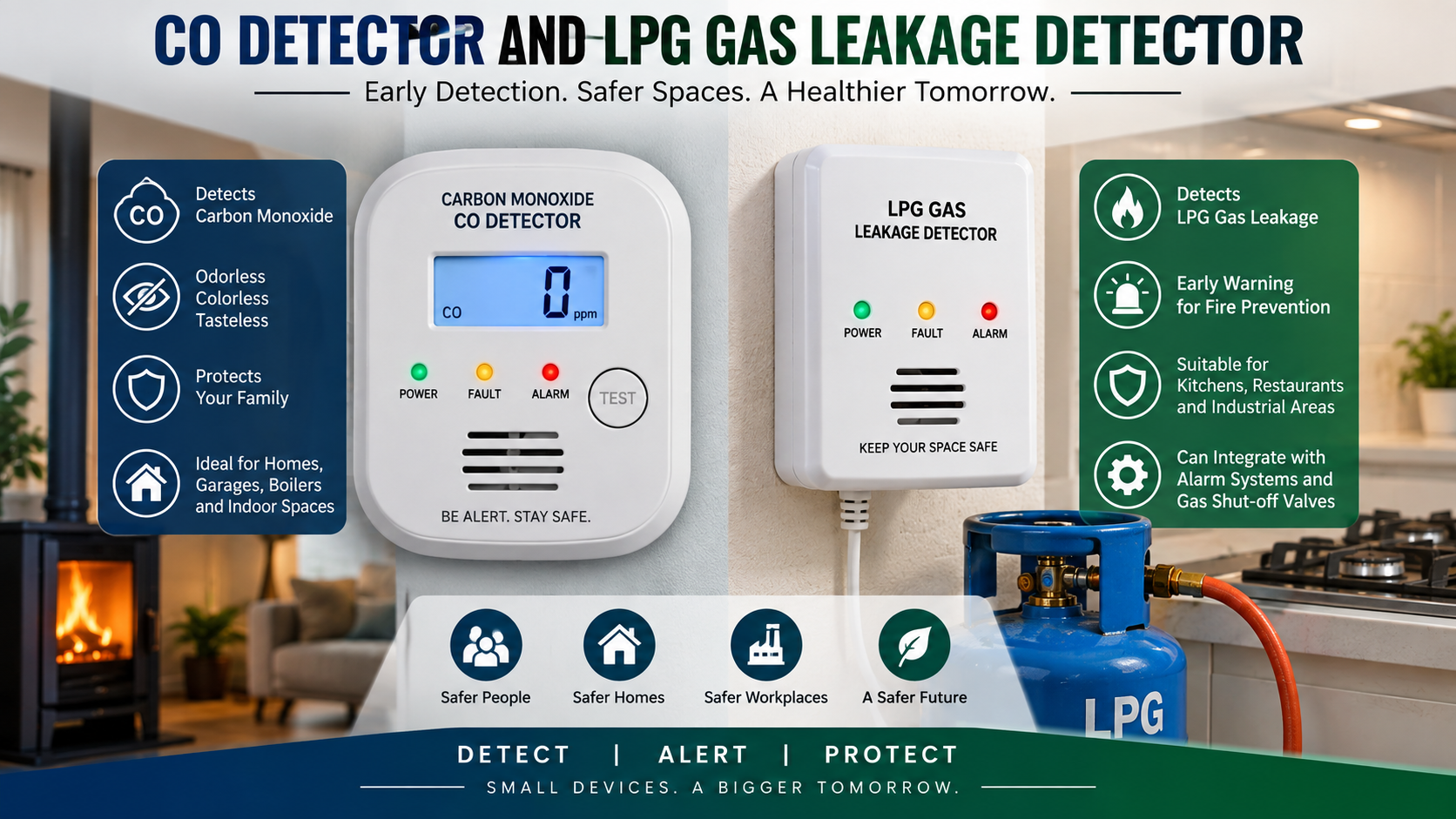
Gas-related hazards can develop quietly and become dangerous before people realise there is a problem. Carbon monoxide and LPG leaks are two major risks found in homes, commercial kitchens, hotels, factories, warehouses, and other environments that use fuel-burning appliances. Installing a reliable CO detector and LPG gas leakage detector provides an important early-warning system that helps occupants respond before gas concentrations reach dangerous levels.
Although both devices are designed to improve safety, they monitor different gases and serve different purposes. Understanding how they work, where they should be installed, and how to maintain them can make gas safety much more effective.
What Is a CO Detector?
A CO detector is an electronic safety device designed to detect carbon monoxide in the surrounding air. Carbon monoxide, commonly called CO, is a colourless, odourless, and tasteless gas produced when fuels do not burn completely.
Possible sources include:
- Gas heaters
- Boilers
- Furnaces
- Generators
- Fireplaces
- Gas stoves
- Petrol or diesel engines
- Wood-burning appliances
Because people cannot naturally smell or see carbon monoxide, exposure may occur without warning. A properly installed CO detector continuously monitors the atmosphere and activates an audible or visual alarm when the detected concentration reaches a specified threshold.
Why Carbon Monoxide Detection Is Important
Carbon monoxide can accumulate in poorly ventilated areas when combustion equipment develops faults or ventilation becomes blocked.
Early symptoms of exposure may include headache, dizziness, weakness, nausea, confusion, or tiredness. Higher concentrations can become extremely dangerous.
A CO detector provides an additional layer of protection by identifying the presence of the gas before occupants might otherwise become aware of it.
It is especially valuable in locations containing fuel-burning appliances or enclosed spaces where engines may operate.
What Is an LPG Gas Leakage Detector?
An LPG gas leakage detector monitors the environment for liquefied petroleum gas escaping from cylinders, pipelines, regulators, valves, burners, or connecting hoses.
LPG is widely used for:
- Domestic cooking
- Restaurants
- Hotels
- Industrial heating
- Commercial kitchens
- Manufacturing processes
- Warehouses
- Catering facilities
Unlike carbon monoxide, LPG usually contains an added odorant that produces a noticeable smell. However, relying entirely on smell is not ideal because leaks may occur when nobody is nearby or people may fail to recognise the warning.
An LPG gas leakage detector automatically monitors gas concentration and produces an alarm when a potential leak is detected.
How an LPG Gas Leakage Detector Works
The detector contains a gas-sensitive sensor that reacts when LPG concentration increases in the surrounding atmosphere.
Depending on the model, the system may provide:
- Audible alarm
- Visual warning indicators
- Digital gas concentration display
- Relay output
- Automatic ventilation activation
- Gas shut-off valve integration
- Connection with fire or building management systems
Industrial detectors may also connect to central monitoring panels, allowing facility managers to identify the affected zone quickly.
CO Detector vs LPG Gas Leakage Detector
| Feature | CO Detector | LPG Gas Leakage Detector |
| Detects | Carbon monoxide | Liquefied petroleum gas |
| Main Risk | Toxic exposure | Fire and explosion |
| Gas Visibility | Invisible | Invisible |
| Natural Smell | No | Odorised for detection |
| Common Locations | Boiler rooms, homes, garages | Kitchens, LPG storage and industrial areas |
| Alarm Function | Warns of CO concentration | Warns of LPG leakage |
| Continuous Monitoring | Yes | Yes |
Neither device should automatically be considered a replacement for the other. A facility using LPG-burning equipment may benefit from both because LPG leakage and carbon monoxide production represent different hazards.
Where Should a CO Detector Be Installed?
Correct placement can influence detector performance.
Suitable locations may include areas near:
- Boilers
- Gas heaters
- Furnaces
- Fireplaces
- Generators
- Mechanical rooms
- Enclosed parking spaces
- Fuel-burning equipment
Detectors should always be installed according to manufacturer instructions and applicable local safety requirements.
Avoid placing devices where excessive moisture, dust, heat, or airflow may interfere with sensor performance unless the detector is specifically designed for those conditions.
Where Should an LPG Gas Leakage Detector Be Installed?
LPG is generally heavier than air, meaning leaked gas can accumulate at lower levels.
For this reason, an LPG gas leakage detector is commonly installed relatively low in the monitored area. However, exact positioning should follow the manufacturer’s recommendations and the site’s risk assessment.
Typical locations include:
- Near LPG cylinders
- Commercial kitchens
- Gas manifolds
- LPG storage areas
- Industrial burner installations
- Boiler rooms
- Gas distribution points
Professional installation is particularly important in industrial or commercial environments.
Important Features to Look for in Gas Detectors
Selecting a detector should involve more than simply comparing prices.
Useful features may include:
- High-quality sensing technology
- Audible and visual alarms
- Fault indicators
- Low-power warnings
- Easy testing functions
- Stable sensor performance
- Relay outputs
- Digital displays
- Alarm history
- Integration with shut-off systems
- Suitable environmental protection rating
For industrial facilities, detectors should also meet applicable certification and installation requirements.
Benefits of Installing Gas Detection Systems
Using a CO detector and LPG gas leakage detector can offer several practical safety benefits.
Key advantages include:
- Early identification of dangerous gas conditions
- Faster emergency response
- Improved protection for employees and occupants
- Continuous monitoring
- Reduced dependence on human detection
- Integration with ventilation and alarm systems
- Better workplace safety management
- Additional protection around fuel equipment
Detectors are most effective when used alongside proper ventilation, equipment maintenance, leak inspections, and established emergency procedures.
Maintenance and Testing Requirements
Gas detectors should not simply be installed and forgotten.
Regular maintenance may include:
- Testing alarm functions
- Inspecting power supplies
- Cleaning detector surfaces
- Checking sensor condition
- Verifying calibration
- Replacing expired sensors
- Inspecting connected alarms and relays
Sensor life varies depending on detector technology, operating conditions, and manufacturer specifications.
Commercial and industrial installations may require scheduled calibration by trained technicians.
Common Causes of LPG Gas Leakage
Understanding leak sources can help prevent incidents.
Common causes include:
- Damaged hoses
- Loose pipe connections
- Faulty regulators
- Improper cylinder installation
- Worn valves
- Corroded pipelines
- Poorly maintained burners
- Accidental mechanical damage
Routine inspection combined with an LPG gas leakage detector creates a stronger approach to preventive safety.
Frequently Asked Questions
1. What does a CO detector detect?
A CO detector monitors the air for carbon monoxide produced by incomplete fuel combustion.
2. Can a CO detector detect LPG?
Generally, no. A standard CO detector is designed specifically for carbon monoxide.
3. What does an LPG gas leakage detector detect?
It detects increasing concentrations of LPG escaping into the surrounding environment.
4. Do I need both types of detectors?
If your property uses LPG-burning appliances, installing both may provide broader protection because they monitor different hazards.
5. Where should an LPG detector be positioned?
Because LPG is heavier than air, detectors are commonly positioned lower in the monitored area according to manufacturer guidelines.
6. Does carbon monoxide have a smell?
No. Carbon monoxide is colourless, odourless, and tasteless.
7. Can gas detectors operate continuously?
Yes. Most fixed detectors are designed for continuous monitoring.
8. Can an LPG detector shut off the gas supply automatically?
Some systems can connect to an automatic shut-off valve or control system.
9. How often should gas detectors be tested?
Testing should follow the manufacturer’s recommended schedule and local safety regulations.
10. Are gas detectors suitable for industrial facilities?
Yes. Industrial detectors are available for factories, warehouses, boiler rooms, commercial kitchens, and process areas.