Copyright Registration for Website and Software Intellectual Property Protection
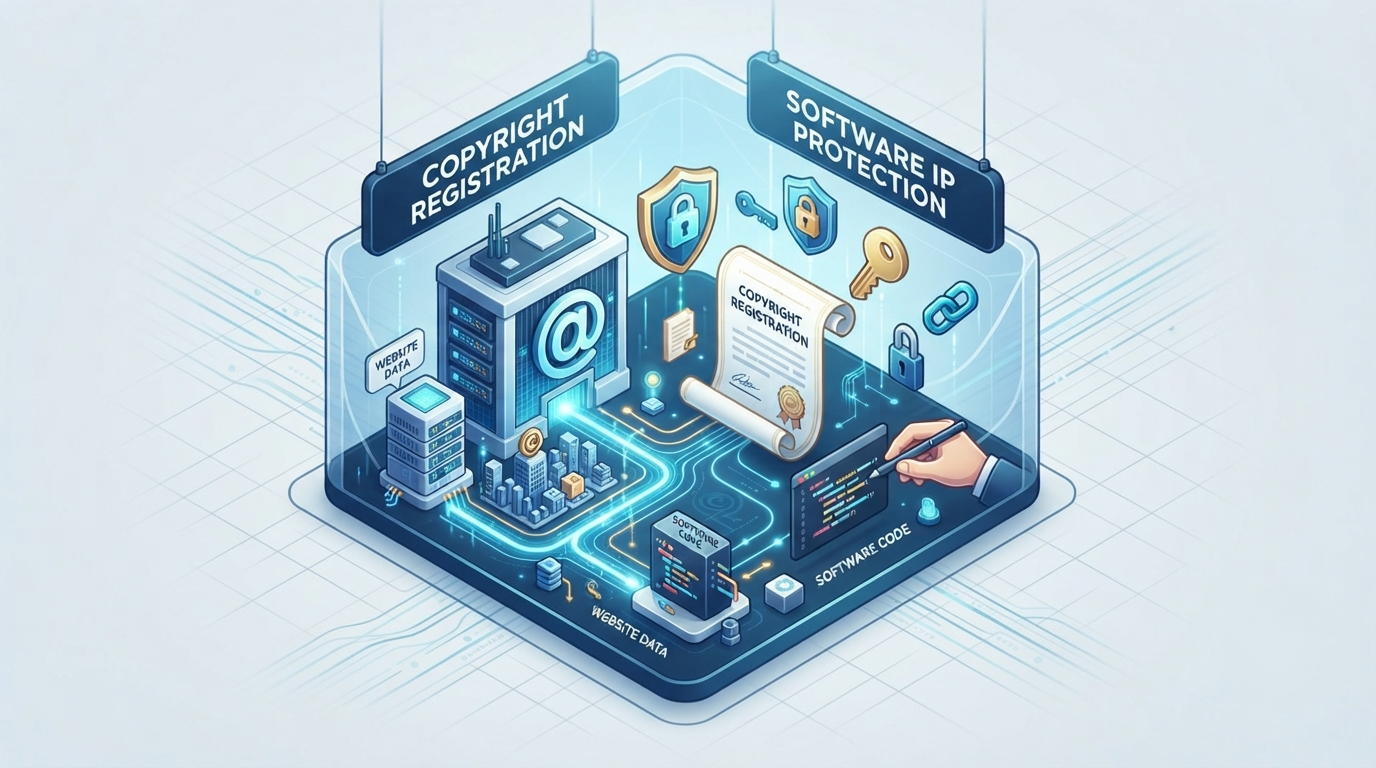
A website or software product is more than a digital tool. It is often the result of months or years of creative work, technical planning, writing, design, and testing. In a competitive online market, protecting that work is just as important as building it. That is why Copyright Registration for Website and Software Intellectual Property Protection have become essential for modern businesses.
From startup platforms and SaaS products to eCommerce sites and custom applications, digital assets can be copied quickly if they are not properly protected. Copyright helps establish ownership, supports legal action in case of infringement, and gives businesses a stronger foundation for growth.
Why Website and Software Protection Matters
Every original website or software product contains intellectual value. The text on a site, the design of the user interface, the code behind the system, and even the documentation may all represent business-critical assets.
Without protection, a company may face:
- Content theft
- Code copying
- Brand misuse
- Revenue loss
- Legal disputes
- Reduced investor confidence
A clear intellectual property strategy helps prevent these risks and protects the originality that gives a business its edge.
What Copyright Covers in a Website
A website includes many creative elements that may qualify for copyright protection. These can include original writing, code, artwork, images, page layouts, animations, and downloadable resources. The goal of copyright registration is to create legal proof that these original elements belong to a specific creator or company.
Common website assets that may be protected include:
- Written content and blog posts
- Source code and scripts
- Custom graphics and icons
- Videos and animations
- Layouts and page design
- Product descriptions
- Original illustrations
- Digital downloads
A registered copyright does not protect general ideas or common layouts, but it does help protect the unique way those ideas are expressed.
How Software Intellectual Property Protection Works
Software Intellectual Property Protection refers to the legal and practical steps used to secure software from unauthorized copying, resale, modification, or use. Software is often one of the most valuable assets a company owns, especially when it powers a unique service or business model.
Software protection may cover:
| Protection Method | What It Covers | Main Benefit |
| Copyright | Source code, object code, documentation | Prevents copying |
| Trademark | Software name and logo | Protects brand identity |
| Patent | Innovative technical inventions | Protects functional innovation |
| Trade Secret | Algorithms and confidential methods | Protects internal know-how |
| Licensing | Usage rights | Controls how software is used |
Using multiple protection methods creates a stronger legal shield.
Why Copyright Registration Is a Smart Business Move
Many business owners believe copyright protection happens automatically, and in some cases that is partly true. However, registration provides stronger legal evidence and makes enforcement far easier if a dispute arises.
Copyright registration can help businesses:
- Prove ownership more clearly
- Strengthen infringement claims
- Improve licensing opportunities
- Support fundraising and acquisition deals
- Increase the value of digital assets
- Build trust with partners and clients
For companies that rely on original digital work, registration is often a practical and strategic decision.
The Difference Between Copyright and Patent Protection
Copyright and patent protection are often confused, but they serve different purposes.
| Feature | Copyright Registration | Patent Protection |
| Protects | Original expression | New invention or technical process |
| Covers | Code, text, design, media | Functional innovation |
| Process | Usually simpler | Usually more complex |
| Cost | Generally lower | Usually higher |
| Best for | Content and creative assets | Technical inventions |
In many software projects, copyright is the first layer of protection, while patents may apply only to specific inventions.
Best Practices for Protecting Your Digital Assets
Businesses should treat intellectual property protection as part of their core operations, not as an afterthought. A strong protection plan combines legal documentation with technical safeguards.
Legal steps
- Register copyright early
- Use non-disclosure agreements
- Include IP assignment clauses in contracts
- Protect software names with trademarks
- Keep records of authorship and development
Technical steps
- Restrict access to source code
- Use secure repositories
- Apply version control
- Encrypt sensitive files
- Review third-party code licenses
- Monitor for unauthorized use
These steps help reduce both external theft and internal confusion over ownership.
Common Mistakes That Weaken Protection
Many companies lose protection simply because they do not organize their digital rights properly. Some common mistakes include:
- Launching a website without recording ownership
- Using unlicensed images or code
- Forgetting contractor agreements
- Delaying registration until after a dispute
- Failing to store development records
- Mixing personal and business ownership of assets
The best time to protect a website or software product is before a problem happens.
How Registration Supports Long-Term Growth
Copyright protection is not just a legal defense. It also supports business expansion. Investors, buyers, and partners often want to know whether digital assets are properly owned and documented.
A business with registered copyright and structured intellectual property records may find it easier to:
- Secure funding
- License software
- Expand internationally
- Sell the business
- Enter partnerships
- Build trust with customers
Protection creates confidence, and confidence supports growth.
Practical Steps to Start the Process
Although the exact process depends on the country, most businesses can follow a similar approach.
Step 1: Identify what needs protection
List the website and software elements that are original and valuable.
Step 2: Gather evidence
Collect source files, screenshots, drafts, code repositories, and contributor records.
Step 3: File the application
Submit the copyright registration application with accurate information.
Step 4: Review and respond
Provide any additional information requested by the copyright authority.
Step 5: Keep your records updated
Maintain files for new content, design changes, or software updates.
Frequently Asked Questions
1. What is Copyright Registration for Website?
It is the formal legal registration of original website content, code, images, and design elements to prove ownership.
2. Why is Software Intellectual Property Protection important?
It helps prevent unauthorized copying, misuse, piracy, and commercial exploitation of software.
3. Does copyright automatically protect software?
Original software may receive protection when created, but registration provides stronger legal proof.
4. Can website content be copyrighted?
Yes. Original text, design, images, and code can often be protected.
5. What does copyright not protect?
It does not protect general ideas, concepts, or common methods used across many websites or software tools.
6. Should startups register copyright early?
Yes. Early registration helps establish ownership before public launch or investor review.
7. Is software name protection the same as copyright?
No. A software name is usually protected by trademark, while the code and content are protected by copyright.
8. Can contractors own software they create?
Ownership depends on the agreement. A written IP assignment clause is usually important.
9. Can software copyrights be licensed?
Yes. Owners can license software under terms they choose.
10. Is copyright enough to protect a digital business?
Not always. A stronger strategy usually includes copyright, trademark, contracts, and technical security.