PCB Assembly and PCB China: Improving Electronics Quality Through Smart Manufacturing
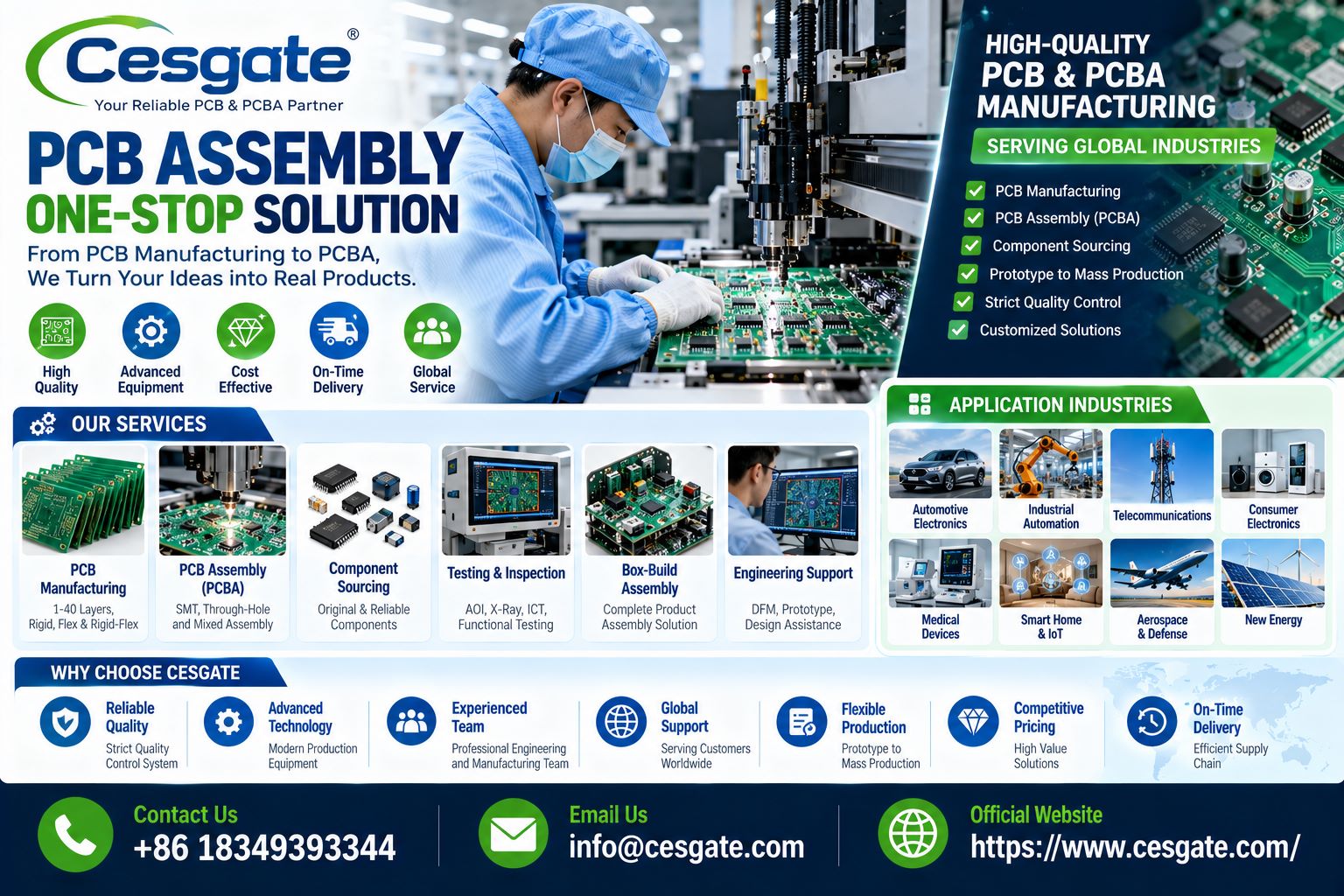
The electronics manufacturing industry is placing greater emphasis on production accuracy, component traceability, and product reliability as electronic devices become more compact and functionally sophisticated.
From industrial automation systems and smart appliances to medical instruments and communication equipment, printed circuit boards form the foundation of modern electronic products.
Professional pcb assembly involves mounting and connecting electronic components to printed circuit boards according to approved engineering specifications.
Meanwhile, pcb china manufacturing services offer sourcing opportunities for businesses seeking printed circuit board fabrication, component assembly, testing, and customised electronics manufacturing.
However, successful electronics production requires more than purchasing a completed circuit board.
Manufacturers must consider component selection, soldering quality, inspection methods, and product testing to achieve dependable results.
For OEM companies, electronics designers, and industrial buyers, understanding how quality-focused PCB production works can support more informed manufacturing decisions.
Why PCB Manufacturing Quality Matters
Electronic products depend on reliable connections between components, conductive pathways, and supporting circuits.
Even a small manufacturing defect can affect the performance of an otherwise carefully designed product.
Common concerns include poor solder joints, incorrectly positioned components, electrical shorts, and damaged circuit board materials.
These problems can create additional inspection requirements or contribute to product failures.
A structured manufacturing process helps businesses identify potential defects and evaluate finished assemblies against approved requirements.
What Is PCB Assembly?
pcb assembly, also known as PCBA, is the process of installing electronic components onto a printed circuit board and creating the required electrical connections.
The process may involve surface mount technology, through-hole assembly, or a combination of both.
Surface mount technology places compatible components directly onto prepared pads on a circuit board.
Through-hole assembly involves inserting component leads into suitable board openings before soldering.
The selected method depends on component type, electrical requirements, mechanical conditions, and product design.
A completed assembly must be inspected and tested according to its intended function.
Understanding PCB China Manufacturing Services
The term pcb china commonly refers to printed circuit board manufacturing and related electronics production services sourced from companies operating in China.
Depending on supplier capabilities, these services may include bare PCB fabrication, electronic component procurement, assembly, inspection, and functional testing.
Some manufacturers also provide engineering support for prototype development and commercial production.
However, service capabilities vary between suppliers.
Buyers should confirm manufacturing specifications, equipment suitability, quality procedures, and technical documentation before placing orders.
A supplier’s ability to communicate clearly about engineering requirements is particularly important for customised electronics projects.
Why Design for Manufacturability Is Important
Design for manufacturability, commonly called DFM, focuses on creating electronic designs that can be manufactured consistently.
PCB designers must consider component spacing, pad dimensions, soldering requirements, and assembly accessibility.
Poor component placement can create unnecessary manufacturing challenges.
For example, components positioned too closely together may complicate soldering inspection or rework.
Manufacturing engineers can review these concerns before production begins.
Early engineering review can help reduce avoidable redesigns and production defects.
Component Selection and Supply Chain Accuracy
Electronic components differ in size, electrical characteristics, packaging, and availability.
Manufacturers should follow approved bills of materials when purchasing components.
A bill of materials typically identifies component references, quantities, and relevant part specifications.
Incorrect substitutions can affect product performance or manufacturing compatibility.
For example, two components with similar functions may have different electrical ratings or physical dimensions.
Any proposed substitution should undergo appropriate engineering approval.
Clear component documentation supports better procurement and consistent assembly quality.
Comparing Important PCB Manufacturing Processes
| Manufacturing Process | Main Function | Quality Consideration |
| PCB Fabrication | Creates the bare circuit board | Dimensions and conductive pathways |
| Solder Paste Printing | Applies solder paste to suitable pads | Deposit accuracy |
| Component Placement | Positions electronic components | Alignment and orientation |
| Reflow Soldering | Forms suitable solder connections | Controlled soldering conditions |
| Through-Hole Assembly | Installs leaded components | Connection integrity |
| Inspection and Testing | Evaluates completed assemblies | Defect detection and functionality |
Each process contributes to the overall reliability of the finished electronic assembly.
The Role of Automated Optical Inspection
Automated optical inspection, commonly called AOI, uses imaging technology to examine electronic assemblies.
Depending on the system, it may help identify missing components, incorrect placement, polarity concerns, and visible soldering defects.
AOI can support efficient inspection of suitable production assemblies.
However, optical inspection cannot identify every possible electrical defect.
Hidden solder connections and internal circuit problems may require additional testing methods.
Manufacturers should therefore combine inspection technologies according to product complexity and quality requirements.
Why Functional Testing Matters
A circuit board may appear correctly assembled while still containing electrical or functional problems.
Functional testing evaluates whether the completed assembly performs specified operations.
The required procedure depends on the electronic product.
For example, an industrial controller may require verification of communication interfaces, input signals, and output functions.
In-circuit testing may also be appropriate for checking selected component and connection characteristics.
However, no single testing method guarantees complete product reliability.
Manufacturers should establish test coverage according to product requirements and relevant risks.
Traceability in Electronics Manufacturing
Traceability helps businesses connect manufactured products with relevant production information.
Depending on the application, records may include component identification, assembly batches, inspection results, and test outcomes.
These records can support investigations if unexpected performance problems occur.
For specialised products, traceability may be particularly important when identifying affected assemblies.
However, documentation must be accurate and appropriately maintained to provide meaningful value.
A practical traceability system should reflect product requirements without creating unnecessary complexity.
Moving From Prototype to Commercial Production
Prototype assemblies allow engineers to evaluate a design before approving larger manufacturing quantities.
Testing may reveal component placement concerns, soldering difficulties, or functional issues.
Engineers can then revise the design or manufacturing instructions where necessary.
Commercial production should use approved specifications, controlled assembly procedures, and appropriate inspection criteria.
Changes to components or production methods should be reviewed before implementation.
This approach helps manufacturers maintain consistency while supporting product development.
Choosing a Reliable PCB Manufacturing Partner
Businesses evaluating electronics manufacturers should consider:
- Manufacturing Capabilities: Confirm suitable PCB fabrication and assembly processes.
- Component Management: Review purchasing procedures and approved material controls.
- Engineering Support: Evaluate design review and technical communication.
- Inspection Systems: Confirm appropriate optical and electrical testing methods.
- Quality Documentation: Review traceability and production acceptance procedures.
- Prototype Support: Assess sample production and engineering change arrangements.
The appropriate supplier should match the technical requirements of the intended electronic product.
Frequently Asked Questions (FAQs)
1. What is PCB assembly?
PCB assembly is the process of mounting and electrically connecting electronic components to a printed circuit board to create a functional electronic assembly.
2. What does PCB China mean?
PCB China refers to printed circuit board fabrication, assembly, and related electronics manufacturing services sourced from suppliers operating in China.
3. What is the difference between PCB and PCBA?
A PCB is the bare printed circuit board, while a PCBA is a board populated with electronic components.
4. Why is PCB testing important?
Testing helps identify electrical and functional problems that may not be visible during ordinary inspection.
5. How should businesses select a PCB assembly manufacturer?
Businesses should evaluate technical capabilities, component management, quality procedures, testing methods, manufacturing documentation, and engineering support.
Media Contact
Department: PCB Manufacturing and Electronics Assembly Enquiries
Business Enquiries: PCB Assembly, PCB China, Printed Circuit Board Manufacturing, Electronic Component Assembly, PCB Prototyping, SMT Assembly, and Custom Electronics Production.
Contact : +86 18349393344
Email : info@cesgate.com
Official Website : https://www.cesgate.com/