Titanium Dioxide Suppliers: How to Choose the Right Supplier for Industrial Applications
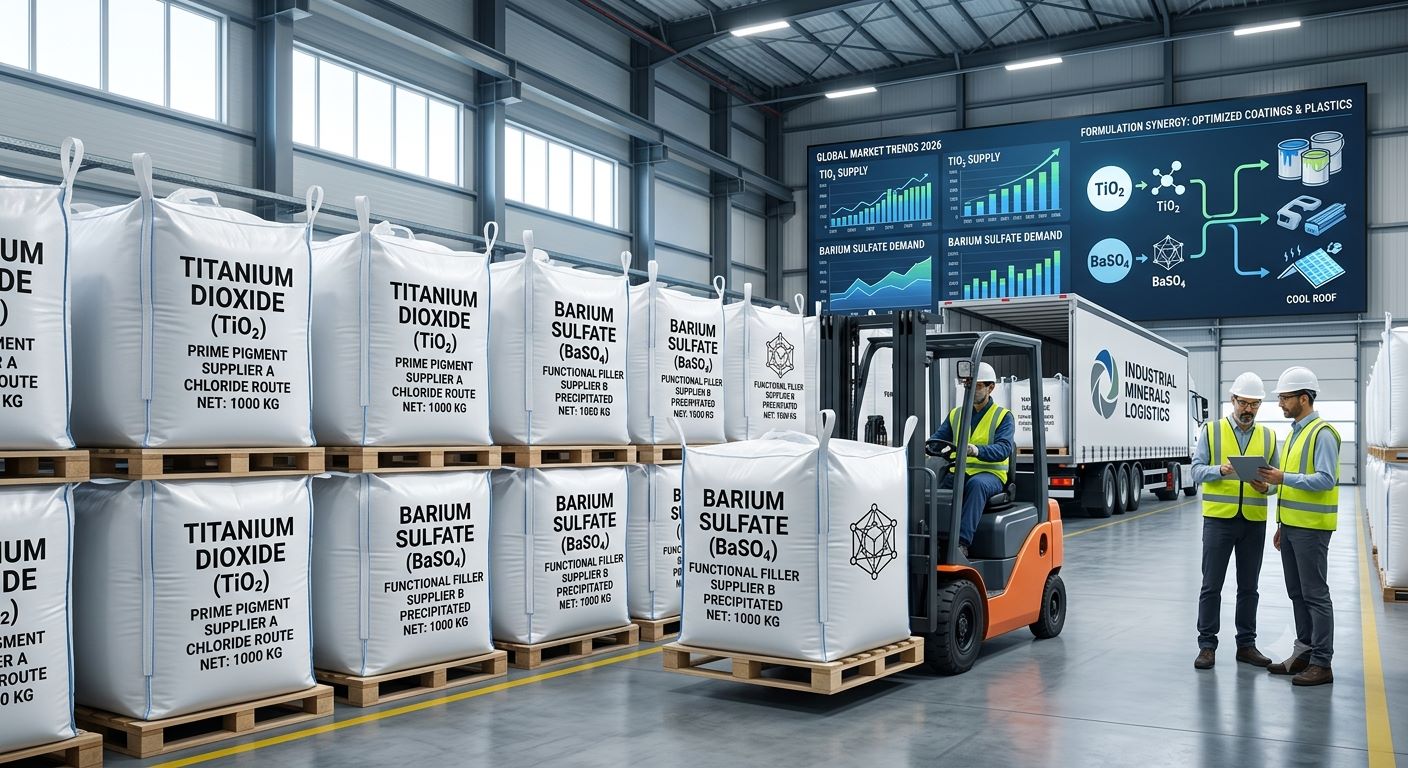
Choosing the right Titanium Dioxide Suppliers is not simply about comparing prices per kilogram. For manufacturers of paints, coatings, plastics, masterbatches, inks, paper, rubber and other formulated products, the quality and consistency of titanium dioxide can directly affect opacity, whiteness, dispersion, durability and production efficiency.
Titanium dioxide (TiO₂) is one of the most widely used white pigments because of its high refractive index and strong light-scattering capability. However, different grades are designed for different applications. Selecting between rutile and anatase grades, evaluating surface treatment, checking technical specifications and assessing supplier reliability are all important before placing a commercial order.
For businesses sourcing titanium dioxide powder, the right supplier should provide more than a competitive quotation. Consistent product quality, technical documentation, reliable logistics, batch traceability and responsive customer support can be equally important.
What Is Titanium Dioxide?
Titanium dioxide is an inorganic compound with the chemical formula TiO₂. It is primarily used as a white pigment because it provides high brightness, opacity and light-scattering performance.
Commercial titanium dioxide is generally available in two important crystalline forms:
- Rutile titanium dioxide – commonly selected for applications requiring strong opacity, durability and weather resistance.
- Anatase titanium dioxide – used in applications where its specific optical and processing characteristics are suitable.
The appropriate grade depends on the end product, processing conditions and performance requirements.
Why Is Titanium Dioxide Important for Manufacturers?
Titanium dioxide can influence several properties of a finished formulation, including:
- Whiteness and brightness
- Opacity and hiding power
- Tinting strength
- UV resistance
- Weatherability
- Dispersion
- Surface appearance
- Product consistency
For example, a decorative paint manufacturer may prioritise opacity and outdoor durability, while a plastic compounder may focus more heavily on dispersion, processing behaviour and colour consistency.
This is why purchasing decisions should be based on application requirements rather than price alone.
How to Choose the Right Titanium Dioxide Suppliers
When evaluating potential suppliers, procurement teams should consider several factors.
1. Check the Titanium Dioxide Grade
Start by identifying the grade required for your application.
A supplier should be able to explain whether a particular grade is suitable for:
- Architectural and industrial coatings
- Printing inks
- Plastics and masterbatch
- Rubber products
- Paper
- Adhesives and sealants
- Powder coatings
- Synthetic fibres
- Other speciality formulations
Ask for a current technical data sheet (TDS) before making a bulk purchase.
2. Compare Technical Specifications
Do not compare suppliers using price alone. Review the technical parameters that matter to your formulation.
Depending on the grade, these may include:
- TiO₂ content
- Rutile or anatase structure
- Whiteness
- Tinting strength
- Oil absorption
- Particle size characteristics
- Surface treatment
- Moisture content
- Residue or impurity levels
- Dispersion performance
The specifications should be evaluated against your existing formulation and production requirements.
3. Ask for a Certificate of Analysis
A Certificate of Analysis (CoA) can help buyers verify the characteristics of a particular batch.
For regular industrial procurement, it is useful to establish whether the supplier can provide batch-specific documentation and maintain consistent specifications across repeat orders.
4. Evaluate Batch-to-Batch Consistency
Consistency is especially important for manufacturers operating continuous or high-volume production.
A pigment that performs differently from one shipment to another can affect colour matching, opacity, viscosity, dispersion and finished-product quality.
Before committing to large volumes, consider conducting a sample or trial order and testing the material under your actual production conditions.
5. Assess Packaging and Logistics
Titanium dioxide is commonly supplied as a dry powder, so packaging quality matters.
Depending on order volume and handling requirements, suppliers may offer different packaging configurations. Buyers should check:
- Packaging size
- Bag material
- Palletisation
- Labelling
- Storage recommendations
- Shipment protection
- Lead time
- Minimum order quantity
A reliable supplier should communicate these details clearly before the order is confirmed.
Rutile Titanium Dioxide vs Anatase: Which One Should You Choose?
The choice between rutile and anatase depends on the intended application.
| Factor | Rutile TiO₂ | Anatase TiO₂ |
| Crystal structure | Rutile | Anatase |
| Refractive index | Higher | Lower |
| Opacity | Generally higher | Generally lower |
| Outdoor durability | Often preferred | More application-dependent |
| Typical applications | Coatings, plastics, inks and other demanding applications | Selected coatings, paper and other applications |
| Selection priority | High hiding power and durability | Application-specific performance and cost |
These are general characteristics rather than universal rules. The performance of a commercial grade also depends on particle characteristics, surface treatment and manufacturing process.
What Is Barium Sulfate Powder and How Does It Compare?
Barium Sulfate Powder is another inorganic white material used in industrial formulations. Its applications include coatings, plastics, rubber, paints, paper and other products.
Unlike titanium dioxide, barium sulfate is generally used as a functional filler or extender rather than as the primary high-opacity white pigment.
Barium sulfate can offer useful properties such as:
- Chemical resistance
- High density
- Good brightness
- Low oil absorption in suitable grades
- Favourable surface characteristics
- Useful filler performance
For some formulations, titanium dioxide and barium sulfate can be used together rather than treated as direct substitutes.
For example, a coating manufacturer may use titanium dioxide to achieve the required hiding power while incorporating a suitable extender to help optimise formulation economics and physical properties.
The correct balance depends on the formulation, pigment volume concentration, required finish and performance targets.
Titanium Dioxide vs Barium Sulfate Powder
A simple comparison can help clarify their different roles:
| Property | Titanium Dioxide | Barium Sulfate Powder |
| Primary role | White pigment | Filler/extender |
| Opacity | Very high | Lower than TiO₂ |
| Refractive index | Very high | Lower than TiO₂ |
| Typical use | Paints, coatings, plastics, inks, paper | Coatings, plastics, rubber, fillers |
| Cost optimisation role | Main performance pigment | Can complement pigment systems |
| Formulation strategy | Often selected for hiding power | Often selected for filler and functional properties |
The two materials should therefore be compared according to the job they perform in the formulation, not simply by their price.
Industries That Use Titanium Dioxide
Reliable titanium dioxide is required across a wide range of manufacturing sectors.
Paints and Coatings
Titanium dioxide helps coatings achieve whiteness, opacity and hiding power. Rutile grades are commonly considered for applications where weatherability and durability are important.
Plastics
TiO₂ is used in plastics and masterbatch formulations for colour, opacity and UV-related performance requirements. Dispersion and thermal processing behaviour are important considerations when selecting a grade.
Printing Inks
Ink manufacturers may use titanium dioxide where high opacity and white coverage are required. Grade selection can influence dispersion and finished print appearance.
Paper
Titanium dioxide can improve optical properties in selected paper applications, including brightness and opacity.
Rubber
Certain rubber formulations use titanium dioxide as a white pigment or functional additive, depending on the required properties.
Powder Coatings
Titanium dioxide can be an important pigment in powder coating formulations, where colour, opacity and durability are key performance considerations.
Questions to Ask Titanium Dioxide Suppliers Before Buying
Before approving a supplier, procurement and technical teams should ask:
What grade of titanium dioxide do you supply?
Confirm whether the material is rutile or anatase and identify the exact commercial grade.
Can you provide a TDS and CoA?
Documentation allows technical teams to evaluate specifications before purchase.
Is the product suitable for my application?
A supplier should be able to provide application-specific information rather than simply quoting a generic product.
What packaging options are available?
Confirm pack sizes, pallet configuration and handling requirements.
What is the minimum order quantity?
This is particularly important for smaller manufacturers or trial orders.
What is the expected lead time?
Reliable delivery can be as important as product quality for production planning.
Can you provide samples for testing?
Testing a representative sample under actual formulation conditions can reduce purchasing risk.
How do you maintain batch consistency?
Ask about quality control, batch testing and traceability.
How to Compare Titanium Dioxide Suppliers
A practical supplier evaluation can use a weighted approach rather than selecting the lowest quotation.
Consider scoring potential suppliers against:
- Product quality
- Technical specifications
- Batch consistency
- Documentation
- Sample performance
- Pricing
- Minimum order quantity
- Delivery reliability
- Packaging
- Technical support
- Communication and responsiveness
For example, if Supplier A offers a lower price but has inconsistent delivery and limited technical documentation, Supplier B may represent better overall value despite a slightly higher purchase price.
This approach is particularly useful for manufacturers where pigment performance affects the quality of the finished product.
Common Mistakes When Buying Titanium Dioxide
Choosing Only on Price
The cheapest material may not deliver the same opacity, dispersion or durability as a grade specifically engineered for your application.
Buying Without Testing
A product that looks suitable on paper may behave differently in your formulation. Sample testing is valuable before committing to large volumes.
Ignoring Surface Treatment
Surface treatment can influence dispersion, compatibility and application performance. Always check the supplier’s technical documentation.
Using One Grade for Every Application
Different industries and formulations have different requirements. A grade suitable for one product may not be the best choice for another.
Failing to Check Documentation
TDS, CoA and safety documentation help technical and procurement teams make informed decisions and maintain internal quality controls.
A Practical Buying Process
A straightforward procurement process can reduce avoidable problems:
Step 1: Define the application
Identify whether the material is intended for paint, coating, plastic, masterbatch, ink, paper, rubber or another formulation.
Step 2: Establish technical requirements
Define the required pigment type, optical properties, dispersion characteristics and other relevant specifications.
Step 3: Shortlist suppliers
Compare suppliers based on product range, documentation, experience and supply capability.
Step 4: Request samples and documents
Obtain representative samples along with the TDS and relevant batch documentation.
Step 5: Conduct application testing
Test the material in your own formulation and production environment where practical.
Step 6: Compare total commercial value
Consider product performance, price, logistics, consistency and technical support.
Step 7: Establish supply terms
Confirm order quantity, packaging, payment terms, delivery schedule and quality requirements before placing the order.
Why Supplier Reliability Matters
For industrial buyers, sourcing is not a one-time transaction. A dependable supplier should be capable of supporting repeat orders while maintaining agreed specifications.
This becomes particularly important when titanium dioxide is a critical raw material. An unexpected change in pigment characteristics can require formulation adjustments and additional quality testing.
A good long-term supplier relationship should therefore be built around consistent quality, transparent specifications, reliable communication and predictable supply.
Frequently Asked Questions About Titanium Dioxide Suppliers
What should I look for in Titanium Dioxide Suppliers?
Look for suppliers offering application-appropriate grades, consistent specifications, technical documentation, reliable delivery, suitable packaging and responsive technical support. Price should be considered alongside these factors.
Which titanium dioxide is better: rutile or anatase?
Neither is universally better. Rutile is often preferred where high opacity and durability are important, while anatase can be suitable for applications with different performance and cost requirements.
What is rutile titanium dioxide used for?
Rutile titanium dioxide is widely used in applications such as paints, coatings, plastics, inks and other formulations where strong opacity, whiteness and durability are required.
Can Barium Sulfate Powder replace titanium dioxide?
Usually, it should not be viewed as a direct one-to-one replacement. Barium sulfate generally serves a different role as a filler or extender, whereas titanium dioxide is primarily used for high-opacity white pigmentation. In some formulations, both can be used together.
How can I test a titanium dioxide supplier?
Request a representative sample, TDS and CoA, then test the material in your formulation. Compare opacity, whiteness, tinting strength, dispersion and other application-specific properties against your current benchmark.
What documents should I request from a supplier?
Depending on your application and regulatory requirements, request the technical data sheet, Certificate of Analysis, safety documentation and relevant product or compliance information.