When Should Innovators Consult a Patent Lawyer Mumbai or Patent Lawyer Pune?
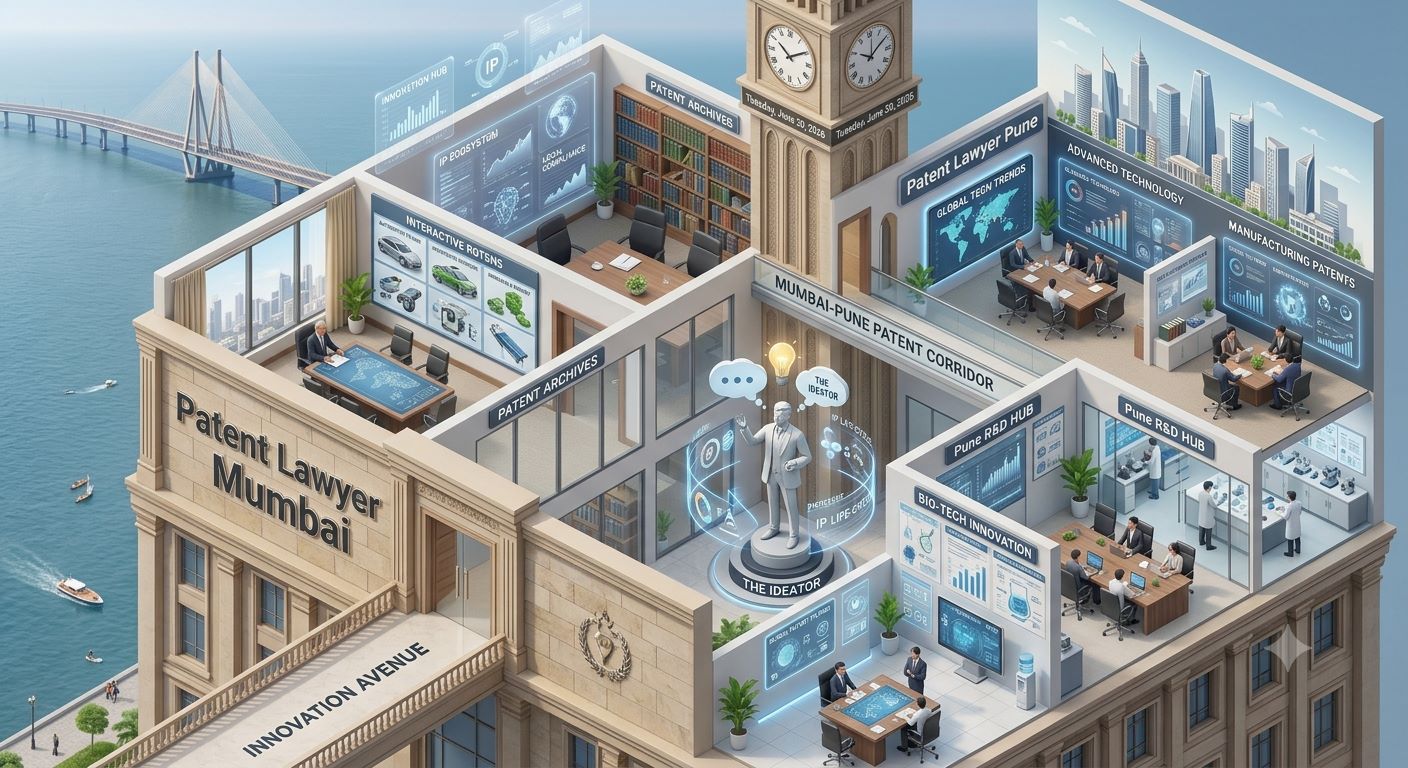
The next few decisions can be important because developing an invention and protecting an invention are two separate processes. Businesses that wait until commercial launch to investigate intellectual property may discover that important patent decisions should have been made much earlier.
For innovators in Maharashtra, understanding when to approach a Patent Lawyer Mumbai or Patent Lawyer Pune can therefore be as important as understanding how patent filing works.
The Right Time to Think About a Patent Is Earlier Than You Think
Many inventors follow a predictable sequence:
Develop → Test → Demonstrate → Market → Patent.
For potentially patentable inventions, it may be more appropriate to consider intellectual property before public disclosure:
Develop → Evaluate → Consider Protection → Disclose → Commercialise.
Why does the sequence matter?
Patent protection is closely connected with novelty. If technical information becomes publicly available before an appropriate filing strategy is implemented, that disclosure can potentially affect patentability.
A Patent Lawyer Mumbai can help businesses identify these risks while an invention is still moving through development.
Your First Prototype May Already Contain Valuable Intellectual Property
Companies sometimes assume they should wait until a product is completely finished before considering patent protection.
That is not always necessary.
Imagine an engineering company developing an automated material-handling machine. The exterior design, control interface and final dimensions may still change, but the engineers have already developed the core mechanism responsible for the technical improvement.
That mechanism may represent the commercially important innovation.
The key is determining whether the invention has been developed sufficiently for an appropriate patent strategy.
A Patent Lawyer Pune can help businesses examine the legal considerations while technical patent professionals assess the invention’s details.
Before Filing, Ask What Problem You Actually Solved
Inventors naturally focus on what they created.
Patent analysis often benefits from beginning somewhere else: the problem.
Suppose an existing production machine regularly overheats after several hours of continuous operation. Your engineering team develops a new internal configuration that reduces this problem.
The relevant questions become:
- What caused the original technical problem?
- How did existing systems attempt to solve it?
- What did your team change?
- Why does the new arrangement work differently?
- What technical result does the change produce?
- Would the solution have been obvious?
These questions can help identify where the potentially inventive concept actually exists.
A Patent Search Can Challenge Your Assumptions
One of the most useful moments in an innovation project can also be disappointing: discovering that somebody else had a similar idea first.
Prior-art searching is intended to investigate existing information relevant to an invention.
This can include:
- Patent applications
- Granted patents
- International patent documents
- Scientific research
- Technical publications
- Other relevant public disclosures
Finding similar technology does not necessarily mean the project has no patent potential.
Perhaps your implementation solves a problem the earlier technology did not address. Maybe a particular technical arrangement produces a different result.
A Patent Lawyer Mumbai can use the findings alongside appropriate technical analysis to help evaluate the legal significance of those differences.
Patent Drafting Is Not the Same as Explaining Your Product
Engineers usually explain inventions differently from patent professionals.
An engineer might say:
“We changed the valve arrangement because the previous configuration created too much pressure.”
That sentence contains useful information, but patent drafting needs considerably more detail.
The Specification Needs to Capture the Invention
The drafting process may examine:
- Technical structure
- Components and relationships
- Operating method
- Alternative configurations
- Technical advantages
- Drawings
- Embodiments
- Patent claims
Why Alternative Versions Matter
The product you manufacture today may not be the only way to implement your invention.
Competitors could change the shape, position or arrangement of particular components.
Effective patent drafting therefore considers the underlying inventive concept rather than simply describing one finished commercial model.
The Patent Claims Can Matter More Than the Patent Title
Business owners sometimes focus on the patent’s title or overall description.
The claims deserve particular attention because they define the legal scope of the claimed invention.
Consider two companies developing similar machines.
Company A obtains claims covering only a very specific configuration.
Company B develops claims appropriately directed towards the core inventive concept while supported by the specification.
The practical scope of the two patent portfolios could be very different.
This is why selecting a Patent Lawyer Pune or appropriate patent professional should involve evaluating drafting and prosecution experience, not simply comparing filing prices.
Patent Protection Should Follow Business Priorities
There is another question that receives less attention:
Even if something can potentially be patented, should you patent it?
Patent applications involve costs, disclosure and ongoing management.
Businesses should therefore consider commercial value.
| Question | Why It Matters |
| Is the technology commercially important? | Helps prioritise patent spending |
| Can competitors reverse-engineer it? | Influences patent vs secrecy decisions |
| How long will the product remain relevant? | Helps assess long-term value |
| Will the technology be licensed? | May increase strategic importance |
| Are international markets planned? | Influences foreign filing decisions |
| Is infringement detectable? | Relevant to practical enforcement |
A Patent Lawyer Mumbai can help connect these legal questions with a company’s wider intellectual property strategy.
Why Pune’s Manufacturing Businesses Should Review Incremental Innovation
Innovation does not always arrive as a revolutionary new invention.
Factories improve processes constantly.
Engineers modify equipment, reduce wastage, increase production speed, improve safety and automate repetitive operations.
Some of these developments may represent routine optimisation. Others could potentially contain patentable technical innovations.
For this reason, companies can establish an internal invention-review system.
A Patent Lawyer Pune may assist businesses in creating processes through which engineers report potentially valuable inventions before the information is publicly disclosed.
Five Moments When Patent Advice Should Be Considered
Businesses do not necessarily need to wait until an application is ready.
1. Before Public Demonstration
If a new technology will be shown at an exhibition, patent implications should be considered beforehand.
2. Before Publishing Technical Information
Research papers, websites, videos and technical brochures can reveal important information.
3. Before Working with External Parties
Development partners, suppliers and consultants may need access to confidential technology.
4. Before Commercial Launch
Product launch plans and patent filing timelines should ideally be coordinated.
5. Before Entering International Markets
Foreign patent rights require strategic planning because patents are territorial.
These moments provide opportunities to make informed decisions before options become limited.
Patent Lawyer Mumbai or Patent Lawyer Pune: What Should You Look For?
Location can be convenient, but expertise deserves greater attention.
Look for professionals who understand:
- Your technical sector
- Indian patent law
- Patent prosecution
- Commercial IP strategy
- Patent ownership
- Licensing
- International filing options
- Patent disputes where relevant
For a mechanical invention, experience dealing with engineering technology may be especially valuable. Pharmaceutical or biotechnology inventions can require different technical expertise.
Choose according to the invention rather than postcode alone.
Frequently Asked Questions
1. When should I speak with a Patent Lawyer Mumbai?
Consider seeking advice before publicly disclosing, demonstrating or commercially launching a potentially patentable invention.
2. Why would an engineering company need a Patent Lawyer Pune?
Engineering businesses regularly create technical improvements that may require patentability, ownership or licensing analysis.
3. Can an improvement be patented?
Potentially. Improvements can qualify when they satisfy applicable novelty, inventive-step and other patentability requirements.
4. Can I patent an idea without building it?
Patent protection does not necessarily depend on having a physical prototype, but the invention must be sufficiently developed and disclosed according to applicable requirements.
5. What is prior art?
Prior art generally refers to publicly available information relevant to assessing whether an invention is new and inventive.
6. Should I conduct a patent search first?
Prior-art research can be valuable for understanding existing technology before significant resources are committed to drafting and filing.
7. What is a provisional specification?
It can be used to disclose an invention and establish an early filing position while development continues, subject to subsequent statutory requirements.
8. Can an Indian patent protect my product overseas?
No. Patent rights are territorial. Overseas protection requires appropriate filings in the countries or regions of interest.
9. Can I license my patented technology?
Patent rights can generally form part of commercial licensing arrangements, subject to appropriate agreements.
10. Is patenting always better than keeping an invention secret?
No. Some technologies may be more appropriately managed as trade secrets. The right strategy depends on commercial and technical circumstances.
https://newsgrow.blogspot.com/2026/08/patent-lawyer-mumbai-and-patent-lawyer.html